
Hyperlocal marketing and personalized advertising has never been more accessible for any restaurant, whether you’re a mom & pop shop or a franchise with thousands of locations. It’s just a matter of honing the right skills alongside an understanding of the local market.
What is Hyperlocal Marketing?
Hyperlocal marketing targets customers within a very specific geographic area, often within a few miles of your restaurant. It focuses on engaging people based on where they are, what they’re doing, how they might get to your location, all at a time where it matters the most. The campaign could be no more than a few hours, or it could last several months. The goals are to optimize your ad spend, seize more opportunities, and personalize your outbound.
The advantages of hyperlocal marketing are plentiful too:
-
Easy to Set Up - Many platforms (Google, Meta, Apple, Yelp, etc.) offer geotargeting features that make it easy to start
-
Easy to Measure - Link ad signals to your POS, Customer Data Platform (CDP), to promotion management services, and more
-
Brand Familiarity - Your local audience only has so many options, staying top of mind makes their decision easier
-
Real-Time - Adapt your promotions to align to events, the weather, holidays, or rush hour. This real-time focus maximizes opportunity cost.
-
Cost Efficient - Start with small budgets to test, scale what works. Since hyperlocal marketing targets “near me” searches, there is a high purchase intent.
Most importantly, hyperlocal marketing is an activity that keeps you at the top of people’s minds day in and day out. People want convenience, and assuming your restaurant operations are efficient, then your marketing will help them make an easy decision at least once per week.
Laying the Foundation
While hyperlocal marketing sounds like pure upside, nothing ever is. There are several systems & processes that your restaurant should have standardized on prior to experimenting with hyperlocal marketing campaigns.
While none of these items are technically necessary (and all of these may vary for each restaurant) they are all worth addressing.
Optimized In-House Operations
This is the most important foundation of them all. Hyperlocal marketing will not fix customer churn. If you have not spent time optimizing order fulfillment, fast payment processing, consistent staffing, effortless pickup, or easy ordering solutions, then you must consider these first. Once you have proven systems in-house, hyperlocal marketing becomes leverage as you dial in your Return on Ad Spend (ROAS) because you can trust that your restaurant will create an experience that leaves the customer in good spirits. Not only that, but you will be able to correlate in-house data with advertising data to tell better stories about your customers while uncovering a new perspective on continuously refining your business operations.
Optimize Local SEO
There are plenty of platforms that will greatly help your discoverability within your local market. Google My Business (GMB) and Meta Business Suite are the most common and the lowest hanging fruit. That being said, I’d recommend you also add your business to OpenStreetMap and Apple Maps.
All of these platforms recommend local businesses when people perform searches on these platforms - and most people perform local searches on these platforms. It is critical that you participate to maximize your discoverability.
When optimizing your discoverability, there are 3 key themes:
Relevance
- Keywords that people use to find you
- Consider a Mediterranean restaurant. Is it traditional Lebanese? Authentic Greek? The “longer tail” the keyword is, the more likely you are to get discovered for both short queries and long queries.
- Select categories that align to your keywords.
- Define operating hours, accessibility & inclusivity, and more.
Distance
This one is more algorithmic, thus it’s not easy to control. It also depends on if the person making the search is sharing their location.
Businesses can optimize for distance by adding key landmarks in their descriptions, maintaining landing pages for each location, and even naming the business
Prominence
In other words, “How well is your business known?”. This comes in the form of:
- Reviews
- Backlinks (social media images, website links, etc.)
- Images shared
It’s crucial that you promote reviews for your restaurant. The more you encourage reviews, the more the platforms will encourage your restaurant. Think of this like a flywheel for growth; the sooner you develop an easy method for people to leave reviews, the better.
By executing on the above, you will have a very strong foundation for experimenting with hyperlocal marketing. Not only will the hyperlocal marketing show better results, but the above activities all imply that trust has been developed with some customer base to begin with.
Keep Up On Local Events
Hyperlocal marketing is built around understanding what’s going on around your restaurant.
Local events often bring new people from outside of the city. These visitors often have company Amex cards, large groups of coworkers, and downtime in an area that they often know little about! If you can reach these people, you may create:
- A new regular every time they come back to the region
- Positive word of mouth that spreads even faster than any marketing campaign,
- More opportunities to generate revenue
While this all sounds great in theory, putting it into practice is an investment for the long term. This is where Intertwine thrives. Intertwine is tracking all events that are happening across the United States, discovering new sources as they come up, and providing this event data as intelligence for restaurants to leverage.
If you would like access to this comprehensive set of events, Intertwine is ready to help you attract a local meetup or attract visitors near your location every day of the year.
Host Local Events
While this isn’t necessary to begin hyperlocal marketing, when you know which events are going on around your restaurant, you may find yourself wanting to host some events. When you host events, you become a second home for a group of people. By giving these people a second home, they are likely to bring new people to share the place they frequent! Not only that, by hosting events you also get access to a whole new set of SEO keywords that are now relevant to your location.
And the flywheel keeps spinning.
Menu & Promotion Optimization
It should go without saying that marketing includes some perceived incentive that makes some offer desirable to some or all of your customer base. Whether that’s a summer special, game day special, or whatever other special, most restaurants will align their service to a local interest.
But, that being said, many restaurants still run promotions reactively. They may be running low on a beer that they will no longer be carrying, so they put a sign out front that says half off to get rid of it. Or they may be discontinuing a seasonal dish, and they add a discount to use up the remaining ingredients.
Those promotions are nice for the restaurant, but they are not thoughtful for the customer.
There is a second kind of reactive promotion though; one that is thoughtful for the customer, builds trust, and keeps your restaurant in their mind. Let’s put a tab on this for now, we will revisit this later.
Social Media Presence
Social media is a free form of advertising. If you find that certain content works very well for your business, that’s a sign to turn it into an advertisement. Restaurants who embrace social media already have a significant advantage over those who don’t. If you don’t, maybe this is your sign to start practicing (a.k.a. posting). Increase your surface area of luck, as the saying goes.
A Scientific Mindset
A good business is one that continuously observes and iterates upon various constraints that are preventing them from growing. This iteration must not stop - the moment it does is the moment you stop growing.
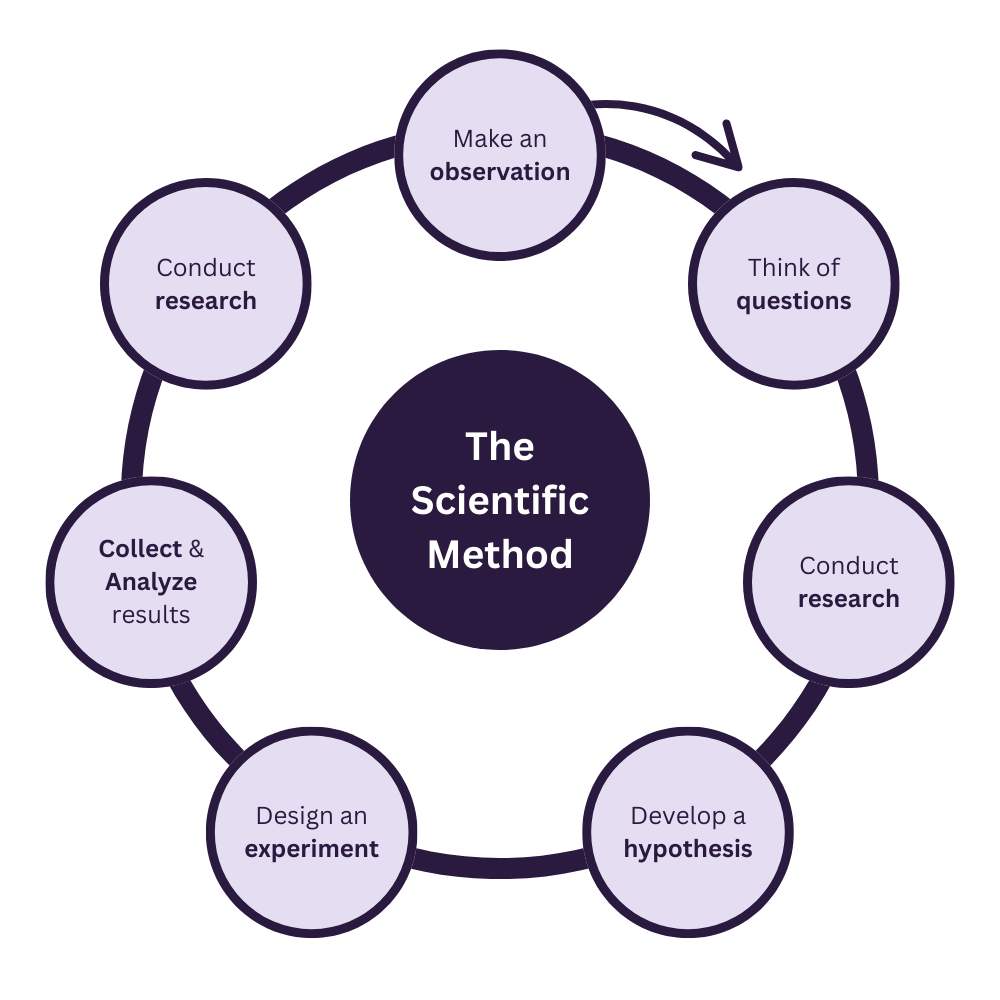
If your goal as a restaurant owner is to serve the best food at one location, you may not need any of these methods at all. This is for those who have a bigger vision for their restaurant, those who want the world to experience it and their community to love it.
None of this stuff happens overnight. Starting the restaurant likely took years of pain, so this is nothing new. But the feeling of starting all over again and having to learn is a good sign - it’s a sign that you are overcoming the business’s current constraint. After all, if you already knew how to execute on hyperlocal marketing, you would likely find yourself interested in solving a different problem right now.
Hyperlocal Marketing Methods
Once you have addressed the foundations above, you may find yourself in a place to begin your hyperlocal marketing campaigns. Towards the beginning of the article, hyperlocal marketing was described as “engaging people based on where they are, what they’re doing, how they might get to your location, all at a time where it matters the most.”
This statement opens up a world of many possibilities. Recall that there was also a “second kind of reactive promotion”, also known as dynamic geotargeting.
Dynamic Geotargeting
Dynamic geotargeting is the practice of automatically adjusting your ad design, messaging, and bid strategy in real time based on changing local conditions such as weather, foot-traffic patterns, or nearby event schedules. This is one of the big advantages that hyperlocal marketing has to offer. For example, instead of a static “Spring Special” banner that runs for weeks, you can swap to “Rainy Day Lattes” when clouds roll in, or “Patio’s Open” the moment the thermometer hits 70°F.
McDonald’s and Burger King have been rolling out these capabilities over the last few years, which we will discuss more in the next section!
There are plenty of signals that can be leveraged for dynamic geotargeting:
-
Weather data to trigger promotions when it’s cold, hot, rainy, or clear.
-
Events near you such as conferences, trade shows, sporting events, concerts, meetups, and more.
-
Existing customer patterns from POS data, historical foot traffic, promotional conversion data, etc.
-
Competitor proximity to bid more aggressively on “near me” searches when a competitor is within X miles
Intertwine already tracks all of this data across the United States, and can begin to tie these signals back to your restaurant in as little as 15 minutes.
Out-of-Home (OOH) Advertising
While the basics of OOH advertising aren’t exactly a breakthrough, they remain a powerful way to cement your restaurant’s presence in the neighborhood—when done right. That crumpled flyer in the mail or the faded bench ad may feel like “junk,” but a bold, well-placed billboard or a clean, eye-catching poster at a busy corner can turn heads and foot traffic alike. If you’ve ever driven by a billboard that made you do a double-take, you know how impactful a single glance can be—especially when it’s on a highway or thoroughfare where diners are already deciding where to stop.
However, OOH also presents unique challenges. It’s great for brand visibility, but it can be hard to:
- Reach new movers specifically: Traditional hand-outs and poster drops can’t distinguish between lifelong locals and someone who just moved into the neighborhood and is actively seeking a dining spot.
- Measure direct ROI: Without a clear tracking mechanism—like a unique QR code or promo code—it’s tough to tie a billboard view or flyer pick-up back to an actual order or reservation.
- Control frequency and exposure: Unlike digital ads, you can’t guarantee how many times someone walks past that bus-stop bench or glances at your sign.
- Personalize messaging: Every passerby sees the same creative, so you miss the chance to tailor offers to different segments (families, office workers, university students).
- Manage costs and lead times: High-impact placements—billboards, transit ads—often require weeks of lead time and significant minimum spends, making quick pivots difficult.
- Protect your investment: Weather, vandalism, and fading can degrade your ads before their campaign even hits peak relevance.
- Align with digital campaigns: If your flyer or poster doesn’t feature a clear call-to-action or tie back to a digital promo, you lose the chance to drive people online for easy reservations or ordering.
By acknowledging these pitfalls—and layering in hyperlocal data—your OOH strategy becomes far more strategic. Use targeted QR codes for new-resident welcome deals, schedule poster refreshes around major local events, and integrate your billboard creative with your next Google or Meta radius campaign. That way, every piece of real-world advertising not only boosts awareness but also feeds directly into measurable, high-intent customer actions.
Intertwine keeps track of all OOH advertising opportunities across the country, from data showing new residents in your local area to where the hottest billboards are (with estimated pricing for a campaign).
Reaching Your Audience
The previous sections already alluded to several methods for your customer to receive your message, though it was much more obvious in the OOH strategies. Here are a few ways to get your message out when applying geotargeting digitally:
- Newsletters
- SMS
- Google / Meta / Apple Advertising
- Multi-Device Touchpoints
- Radio
- Social Media
This section is easily a blog of it’s own, which we will be releasing soon. If you would like to be notified when it’s released, join our newsletter!
Stay up to date as we release more strategies, guides, and original perspectives.
Examples in the Real World
McDonald’s AI-Driven Menu Personalization
McDonald’s invested in Dynamic Yield’s machine learning engine to deliver real-time, location-aware menu decisioning at over 12,000 U.S. drive thrus and in-store kiosks, surfacing the right offer based on time of day, weather, restaurant traffic, and past popularity.
This rollout began as a 2018 U.S. pilot, then scaled nationally within six months, making McDonald’s one of the first global restaurant brands to automate hyper-personalized menu displays. Customers see “Breakfast favorites” in the morning, “Easy-prep items” when the line’s long, or “Cool drinks” on hot afternoons—so every suggestion feels like it “gets” what they want right now.
By tapping site-specific data and local signals, McDonald’s treats each drive-thru visit as a micro-experiment in personalization, iterating offers to boost both satisfaction and upsells
Burger King’s “Whopper Detour” Geofencing Stunt
In December 2018, Burger King geo-fenced within 600 feet of nearly every McDonald’s location, delivering a push notification for a one-cent Whopper via its mobile app, making it just a click away. This tactic drove downloads of BK’s redesigned app and redirected McDonald’s foot traffic straight into Burger King outlets for nearly free whoppers.
Although the stunt ran for only one week, it generated massive media, led the Apple and Android App Stores, and it taught marketers everywhere that highly precise proximity triggers combined with an incredible offer can turn passersby into customers in seconds.
This power is accessible to all businesses now, many just don’t know they can leverage it.
Both of these examples shows that when you know the local conditions of your potential diners, you can serve the perfect message, on the perfect device, at the perfect moment. That’s hyperlocal marketing in action.
Closing Notes
Intertwine is democratizing hyperlocal marketing to restaurants of all sizes today. With the right foundations, it truly is accessible to any restaurant that is willing to make bold moves in the market they operate within.